“We’re just too busy”. This is one of the most common reasons businesses put off improving the way they work, which makes sense. When your team is already juggling customer requests, meetings, deadlines, and daily operations, finding the time to learn a new process or roll out a new system can feel impossible. The irony, though, is that staying busy often means holding onto the very habits that slow everyone down. In fact, according to research, knowledge workers spend 60% of their time on “work about work”: status updates, coordination, and tool-switching that crowds out the deep, high-value tasks they were actually hired to do (Khrystenko, 2026).
Luckily, improving productivity does not always call for a major technology upgrade or months of planning. Sometimes, the biggest improvements come from small changes that take only a few minutes to implement but continue saving time every single day. They’re practical, low-friction, and built for teams that are already stretched thin. Here are a few office productivity hacks that busy teams can start using right away.
1. Automate One Repetitive Task
Every office has tasks that seem small but happen dozens of times each day. Think about activities like:
- Renaming scanned documents
- Routing invoices for approval
- Sending appointment confirmations
- Creating recurring calendar reminders
- Moving files into shared folders
Choose just one repetitive task and look for a way to automate it. Many workplace applications already include automation features that businesses never use. Even saving five minutes per employee per day can add up to dozens of productive hours over the course of a year. Start small and build from there.
2. Stop Searching for Documents
How often does someone ask, “Does anyone know where that file is?” Searching through email attachments, shared drives, desktops, and filing cabinets wastes valuable time. Create one central location where everyone stores business documents. Whether you use cloud storage or a document management system, establish simple naming conventions and folder structures so employees always know where to look. When information is easy to find, teams spend less time searching and more time working.
3. Schedule Fewer Interruptions
Many employees work in five-minute bursts before another notification pulls them away. Instead of reacting to every email, message, or request as it arrives, encourage employees to schedule dedicated times throughout the day for communication. For example:
- Check email three times daily.
- Respond to messages during scheduled blocks.
- Reserve uninterrupted focus time for important projects.
Reducing constant context switching helps employees complete work faster while lowering stress.
4. Make Your Office Technology Work Harder
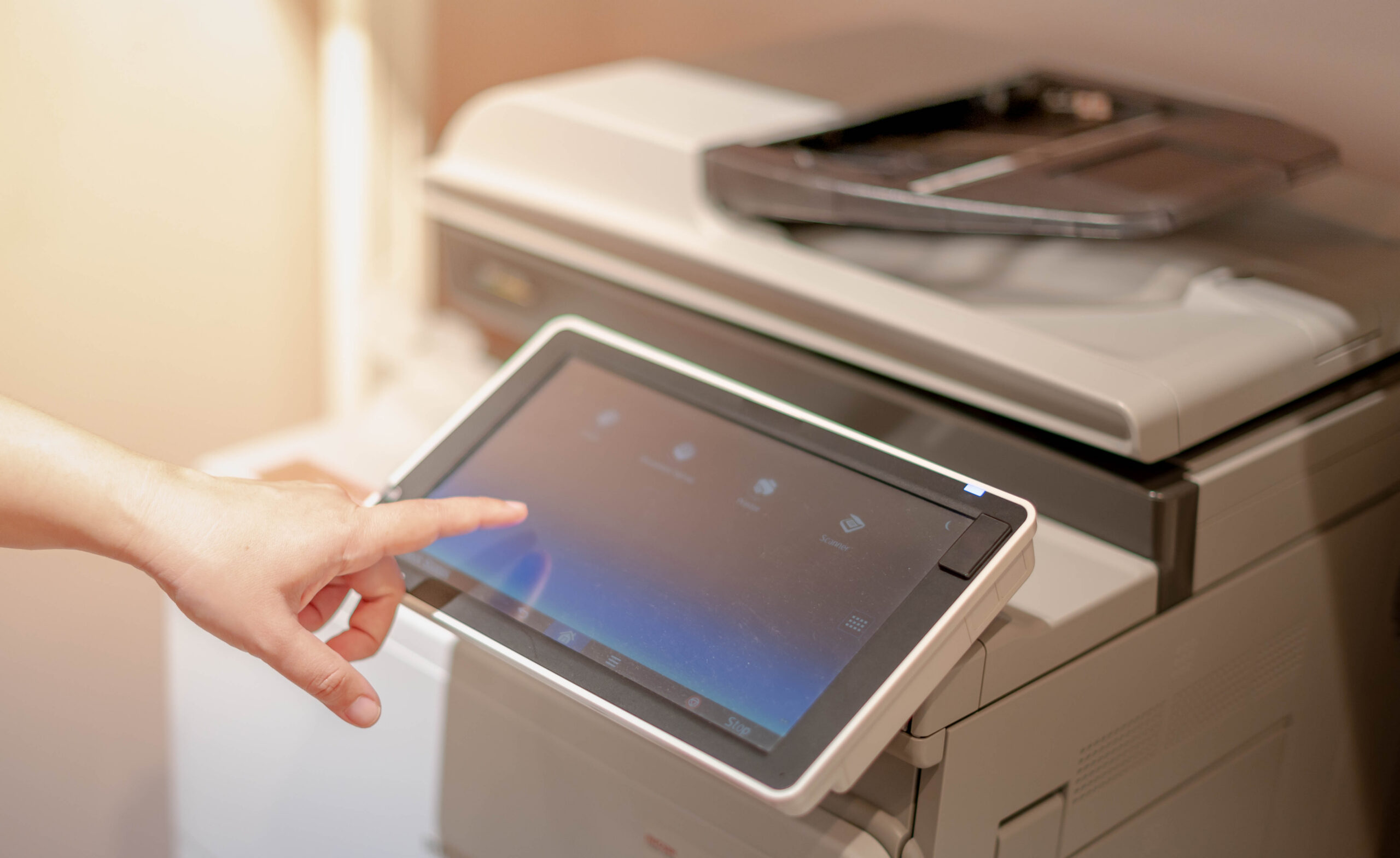
Many businesses use only a small percentage of the features built into their office technology. For example, your multifunction printer may already be able to:
- Scan directly to cloud storage
- Convert documents into searchable files
- Route scanned documents automatically
- Create editable PDFs
- Send files directly to email
Employees often continue using manual processes simply because they do not know these features exist. Taking a little time to explore the tools you already own can uncover significant productivity gains without purchasing new equipment.
5. Create Templates for Repetitive Work
If employees repeatedly create the same documents, emails, proposals, or reports, templates can dramatically reduce preparation time. Consider creating templates for:
- Customer emails
- Meeting agendas
- Project updates
- Purchase requests
- Internal forms
- Client proposals
Templates improve consistency while allowing employees to complete routine work much faster.
6. Let AI Handle the First Draft
Artificial intelligence works best when it handles repetitive administrative work rather than replacing people. Many AI tools can help employees:
- Summarize meetings
- Draft emails
- Organize notes
- Create outlines
- Generate action items
- Summarize long documents
Employees still review and personalize the final result, but AI reduces the time spent on the initial draft. It is one of the easiest ways to reduce manual work without changing existing business processes.
7. Improve Meetings Without Scheduling More Meetings
Research shows that 71% of senior managers consider most meetings unproductive, yet meeting time has increased by 252% since February 2020. Leaders now spend an average of 23 hours per week in meetings (Khrystenko, 2026). That number alone should be alarming.
The fix isn’t to eliminate meetings entirely, but to challenge each one. Before scheduling, ask: “Could this be a brief async video, a short written update, or a shared doc with comments?” Tools like Loom (for async video) or a simple Slack message with a deadline can replace most check-ins.
Teams that protect blocks of uninterrupted time—even just two or three meeting-free hours per day—consistently report stronger output and higher morale. The calendar is one of the most powerful productivity levers available, so use it intentionally to improve office efficiency.
8. Make Small Improvements Every Month
One reason change feels overwhelming is that businesses try to improve everything at once. A better approach is continuous improvement. Choose one small productivity improvement each month. It might be:
- Creating a shared template
- Organizing digital files
- Adjusting default print settings
- Automating one approval process
- Cleaning up a shared drive
- Learning one new software feature
These small improvements require very little disruption but create lasting benefits over time.
Technology Should Simplify Work, Not Complicate It
One of the biggest misconceptions about improving productivity is that it always requires replacing existing systems. In reality, the right workplace technology often enhances the tools you already use. Features like document management, workflow automation, cloud scanning, AI-assisted organization, and managed print services are designed to remove repetitive tasks from your employees’ day without creating unnecessary complexity.
At AD Solutions, we help businesses improve productivity by simplifying everyday work. Whether it is document management, managed print services, workflow automation, cloud collaboration, or multifunction printers, our solutions are designed to reduce manual work and help employees focus on what matters most. Contact us today for a free consultation.
Frequently Asked Questions
- What are the easiest office productivity hacks to implement?
Some of the simplest improvements include automating repetitive tasks, organizing digital files, creating templates, scheduling dedicated email time, and using built-in productivity features in your existing office technology.
- How can busy teams improve productivity without major changes?
Focus on small, incremental improvements that fit into existing workflows. Even automating one repetitive task or improving document organization can save significant time over the course of a year.
- Why are small workflow improvements so effective?
Small improvements are easier for employees to adopt, create less disruption, and often compound over time. A few minutes saved each day across an entire team can translate into hundreds of productive hours each year.
Reference
Khrystenko, V. (2026, May 11). 30+ productivity in the workplace statistics every manager needs in 2026. WorkTime. https://www.worktime.com/blog/statistics/productivity-in-the-workplace-statistics