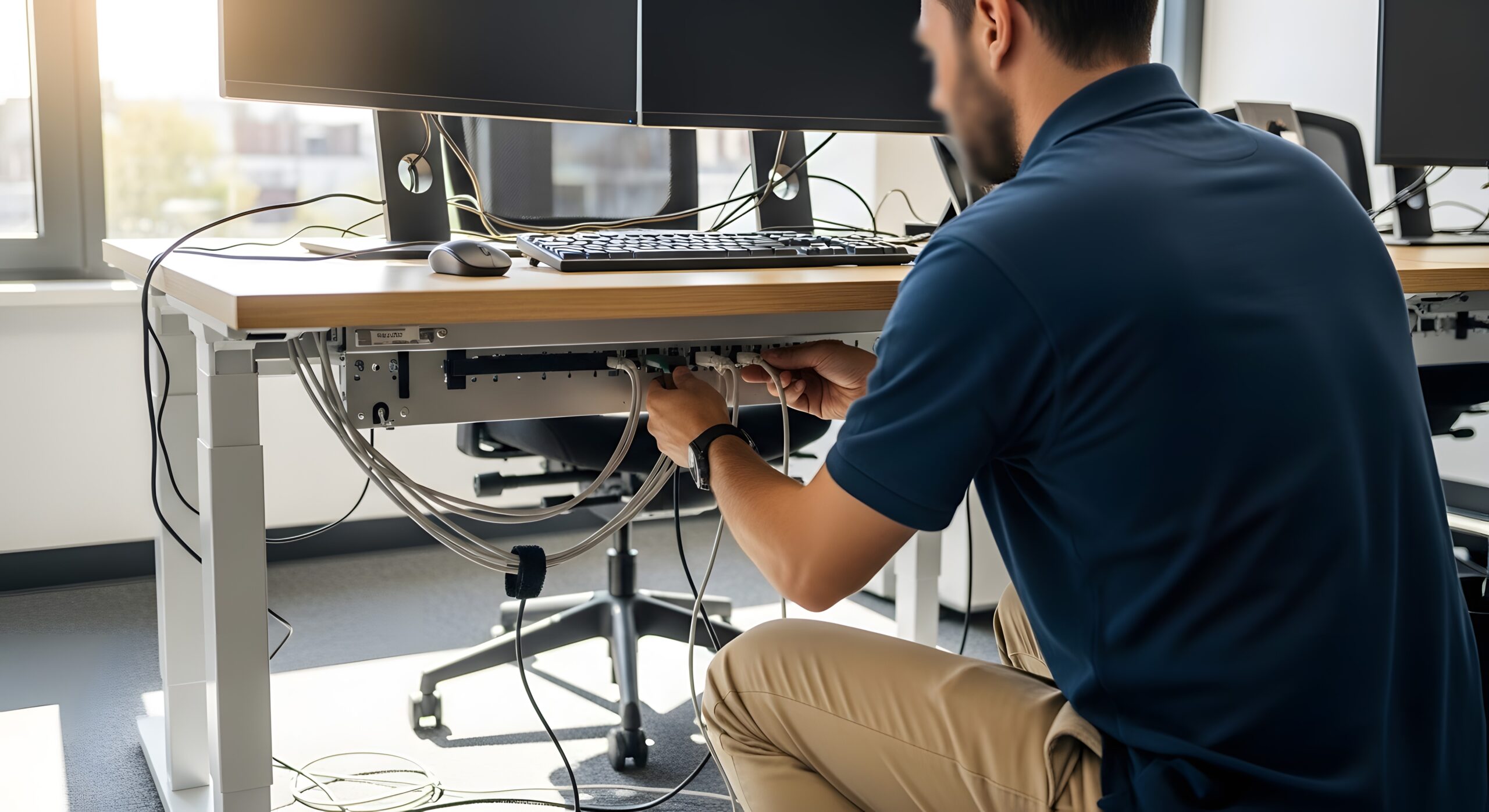
The workplace has changed more in the past few years than it did in the decade before it. Technology, employee expectations, and business needs continue to evolve at lightning speed, and 2026 is shaping up to be another year of meaningful shifts.
For office managers and business leaders, staying ahead of these trends is essential for keeping teams productive, engaged, and ready for what’s next. Here are the top workplace trends to keep on your radar as we head into 2026.
1. Hybrid Work Becomes More Structured
Hybrid work isn’t going anywhere, but it is becoming more intentional. In 2026, companies are shifting from “work wherever” to structured hybrid schedules that balance flexibility with collaboration needs.
We’ll see more offices:
- Setting dedicated in-office days for teamwork
- Redesigning spaces to support both focus work and group meetings
- Using technology to coordinate schedules and keep communication clear
Teams want flexibility, but they also want connection. Structured hybrid models aim to give them both.
2. AI as a Collaborative Partner
Artificial intelligence is no longer just a background tool—it’s becoming an everyday teammate. In 2026, AI will continue supporting employees by taking repetitive tasks off their plates.
Think of AI as a smart assistant that can draft emails, summarize long meetings, analyze data, and surface insights in seconds. Many of these features are already being built directly into the tools offices use every day, from communication apps to project management software.
With AI handling administrative work, employees can focus on higher-value tasks such as problem-solving, strategy, creativity, and relationship-building. But to get the most out of these tools, businesses will need to invest in training, so teams feel confident using AI responsibly and effectively.
As AI continues to evolve, skills like critical thinking, emotional intelligence, and creativity will matter more than ever. Companies that prioritize upskilling and continuous learning will be best positioned to thrive in this new landscape, where technology empowers employees instead of replacing them.
3. Smart Office Technology Takes Center Stage
As workplaces continue to evolve, smart office technology is quickly shifting from “nice to have” to “essential.” In 2026, more businesses are embracing tools that automate tasks, streamline workflows, and keep teams better connected.
You’ll see a rise in things like:
- AI-enhanced meeting tools
- Smart sensors for energy efficiency
- Voice-enabled devices
- Interactive displays and digital collaboration boards
- Cloud-connected printers and MFPs that scan, store, and secure documents seamlessly
When your office tech works seamlessly in the background, your team can focus on meaningful work instead of troubleshooting. The result is fewer bottlenecks, less downtime, and a workplace that simply runs better.
4. Mental Health Moves to the Forefront
Companies are acknowledging the profound impact of mental health on their workforce. Leading a business in 2026 means creating a culture where it’s safe to discuss mental health challenges without stigma. This involves more than just offering an employee assistance program (EAP). Progressive organizations are training managers to recognize signs of burnout and support their teams with empathy. They are also providing access to mental health resources, such as therapy, mindfulness apps, and workshops. Promoting a healthy work-life balance through flexible schedules and clear boundaries is another critical piece of this puzzle.
Economic uncertainty has also put a spotlight on financial stress. Employers are realizing that supporting their employees’ financial well-being is not only the right thing to do but also good for business. Financially stressed employees are more likely to be distracted and less engaged at work. By 2026, expect to see a rise in benefits that address financial health. These can include access to financial advisors, retirement planning education, and tools for managing student loan debt. By helping employees build a secure financial future, companies can foster loyalty and reduce a major source of stress.
5. Cybersecurity Becomes Everyone’s Job
As businesses rely more on digital tools, cybersecurity is taking center stage in 2026. What used to be viewed as an IT-only responsibility is now a shared effort across the entire organization. Every employee — from new hires to leadership — plays a role in keeping company data safe.
You’ll see more companies focusing on:
- Cybersecurity awareness training to help employees spot phishing attempts, suspicious links, and unusual activity
- Zero-trust security models that verify every user and device before granting access
- Built-in device protections, including encrypted MFPs, secure print release, and automatic data overwrite
- Stronger access controls and authentication, such as multi-factor authentication or ID card logins
As cyber threats become more sophisticated, businesses are realizing that the human layer is often the biggest vulnerability. A single click on a malicious email can compromise an entire network — but a well-trained, security-aware team can stop threats before they spread.
In 2026, creating a culture of cybersecurity is essential for protecting data, maintaining customer trust, and keeping operations running smoothly.
Preparing for the Workplace of 2026
The workplace is changing quickly, but that doesn’t mean it has to feel overwhelming. If you’re looking to upgrade your technology, streamline workflows, or create a more connected office, AD Solutions is here to help. From smart MFPs to secure VoIP systems and collaboration tools, we’ll guide you toward solutions that help your workplace thrive in 2026 and beyond.
Contact us today to learn how we can support your goals for the year ahead.